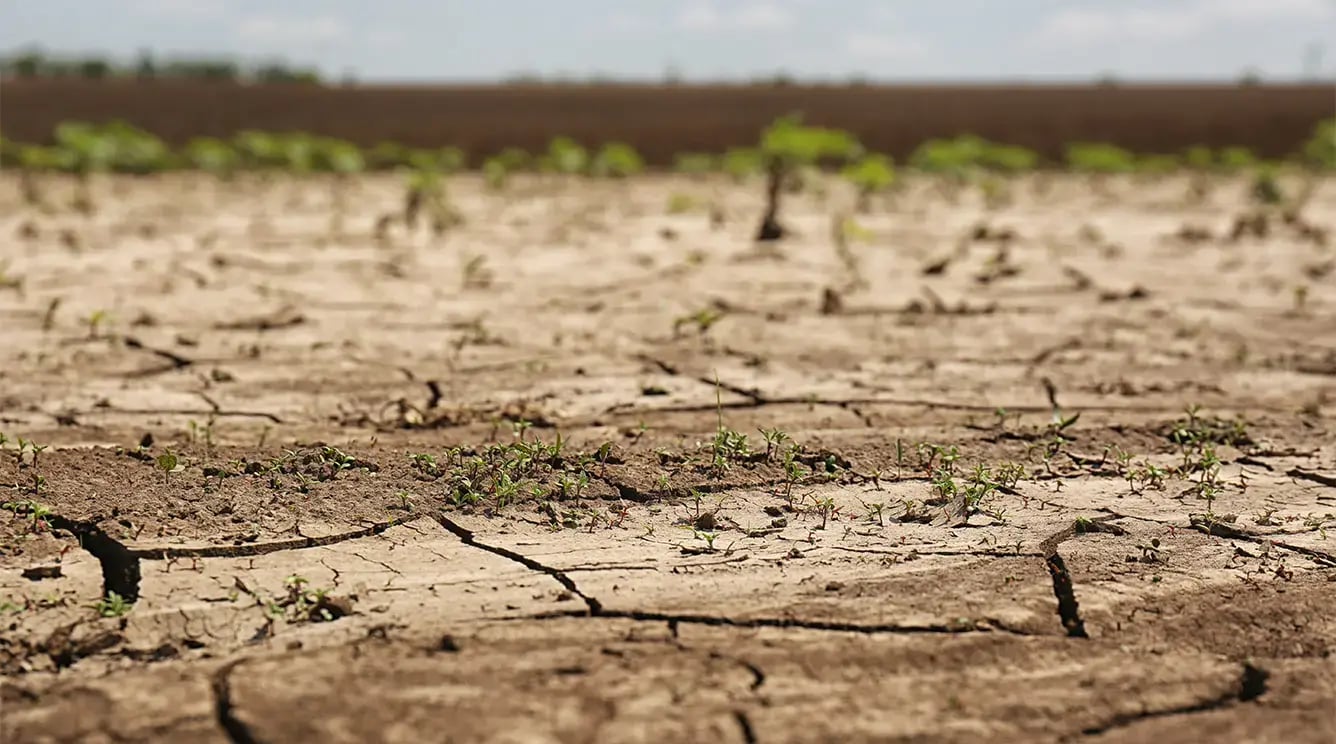
Droughts are on the increase across Europe – and that will continue to be the case into 2027.
New forecasts are based on the strong development of El Niño, a prominent North Atlantic warm hole, and emerging heatwaves in the Norwegian and Mediterranean seas.
Sea-surface temperatures have risen rapidly, suggesting a high likelihood of El Niño conditions, leading to a major drought across the continent extending to south-west Russia.
Ninety-day precipitation observations indicate widespread dry-to-drought conditions through France, Eastern Europe, the Baltic Region, and Scandinavia.
The European Commission Joint Research Centre said: “Drought conditions worsened in Europe in late May.
“Europe experienced above average temperatures with a large and prolonged heatwave over the Iberian Peninsula, the UK, France, the Alps and Italy. Alert conditions expanded in Ukraine, Belarus, Poland, and in the Baltic Sea regions.
“It is expected that in the coming months the El Niño climate phenomenon will occur and will worsen drought, flood, heat, and storm conditions across many regions of the world.
“Looking at the potential evolution in the coming months, it has a very high likelihood of being very strong and even turning into an unprecedented event.
“Across all scenarios, extreme heat will build across the tropics and subtropics from September. It will peak between December 2026 and February 2027 and persist into spring 2027.”
Unusually warm weather is set to spread across much of the world, growing stronger as El Niño intensifies, most likely hitting North and South America, Central America, Africa, the Euro-Asian continent and Australia.
Impacts on crop productivity are likely in areas including Sub-Saharan Africa, India, China, Australia, Brazil, with global food prices moving in different directions depending on where a crop is grown and the intensity of the weather.
El Niño varies in severity and impact. In 2015 and 2016 it caused severe drought across Australia and south-east Asia, while weakening the Indian monsoon and reducing the output of grain, palm oil and sugar, and disrupting harvests in parts of South America.
In 2011, after months of little or no rain in central and eastern Europe, water levels on some parts of the Danube River fell to their lowest level in 70 years. In Romania, one of the country’s nuclear power stations was at risk of shutdown because of insufficient water for cooling, and, in Serbia, the drought revealed sunken World War Two ships and unexploded bombs.
However, the strongest El Niño on record was in 1997-1998, when drought in some parts of Asia slashed rice production.