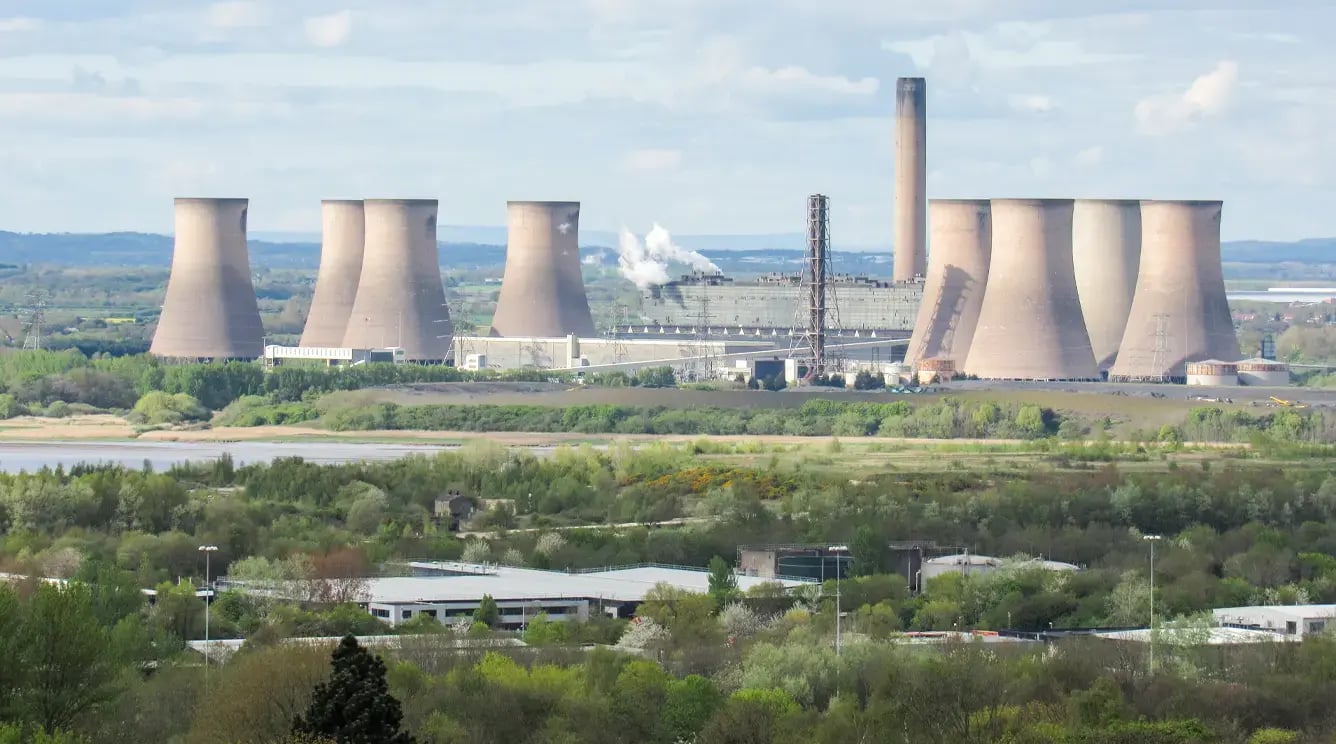
Nuclear energy has been in and out of favour over the decades – and is the flavour of the month again, with South Yorkshire heavily involved in progress.
Construction is underway on two giant new reactors – Hinkley Point C and Sizewell C – and the UK government’s nuclear delivery body, Great British Energy-Nuclear (GBE-N), has selected Rolls-Royce as the preferred bidder to build the UK’s first small modular reactor (SMRs).
SMRs are smaller and easier to deploy than conventional nuclear plants, offering a cost-effective and flexible route to decarbonisation that overcomes many of the economic and logistical challenges associated with nuclear energy.
Rolls Royce SMR, a subsidiary of the well-known UK engineering giant, will deploy three 470MW SMRs at Wylfa on the coast of Anglesey, North Wales.
Expected to come online in the mid-2030s, each reactor will generate 470MWe of electrical power and 1358MWt of heat. Supported by a £2.5billion government funding package aimed at accelerating UK SMR deployment, the project is also expected to create 3,000 new jobs in the region.
Based on proven and widely used technology, the Rolls-Royce SMR is a type of pressurised water reactor (PWR) - which typically carries heated pressurised water from the reactor core to a steam generator, producing steam that is then used to drive turbines and generate electricity.
The most significant innovation is the modular approach to construction and assembly, which will see as much as 70 per cent of the new reactors’ components produced, assembled and tested in controlled factory environments, enabling the final product to be standardized, replicated at scale, and delivered in fleets.
Unique for the nuclear industry, but drawing on capabilities developed and widely used in other sectors (for example renewables and oil and gas), this approach is currently being tested by engineers at the Advanced Manufacturing Research Centre (AMRC) which is now making and testing prototypes of the individual modules that will be assembled into the Rolls-Royce power plants.
Chris Cholerton, CEO of Rolls-Royce SMR, said: “We will deliver nuclear power very differently by utilising modularisation and a high level of factory build, therefore minimising the impact on local people from infrastructure delivery.”
While developments in the sector will be key to meeting future domestic energy needs, the opportunity for export into other markets could quickly become a major driver of economic growth.
Indeed, Rolls-Royce has recently been selected by European utility firm CEZ to build up to three gigawatts (3 GW) of new nuclear power in the Czech Republic and is now also in discussions with partners in Sweden, the Netherlands and Hungary.
Thanks to its relative simplicity and affordability, SMR technology is attracting growing interest from economies that see the technology as a gateway to nuclear energy, such as Indonesia, Malaysia, Thailand, the Philippines, Vietnam and Singapore.
Alongside investment, one of the keys to this scale up will be ensuring the sector taps into all the UK’s available expertise including skills, innovations and processes developed beyond the nuclear sector.
Others looking to make moves include the Amazon backed nuclear startup X-Energy and US firm, Holtec.
Tom Greatrex, CEO of the Nuclear Industries Association, the main trade body for the UK’s civil nuclear sector, told the Engineer magazine: “Compared to other times, it feels much more real. And it feels real because there are projects being agreed and started rather than people just talking about them. We’ve got more happening now than we’ve had since the 1980s. Now the focus is on delivery, and that’s what the industry is focused on because we’ve got a responsibility to play our part alongside all the public policy instruments that make it possible.”