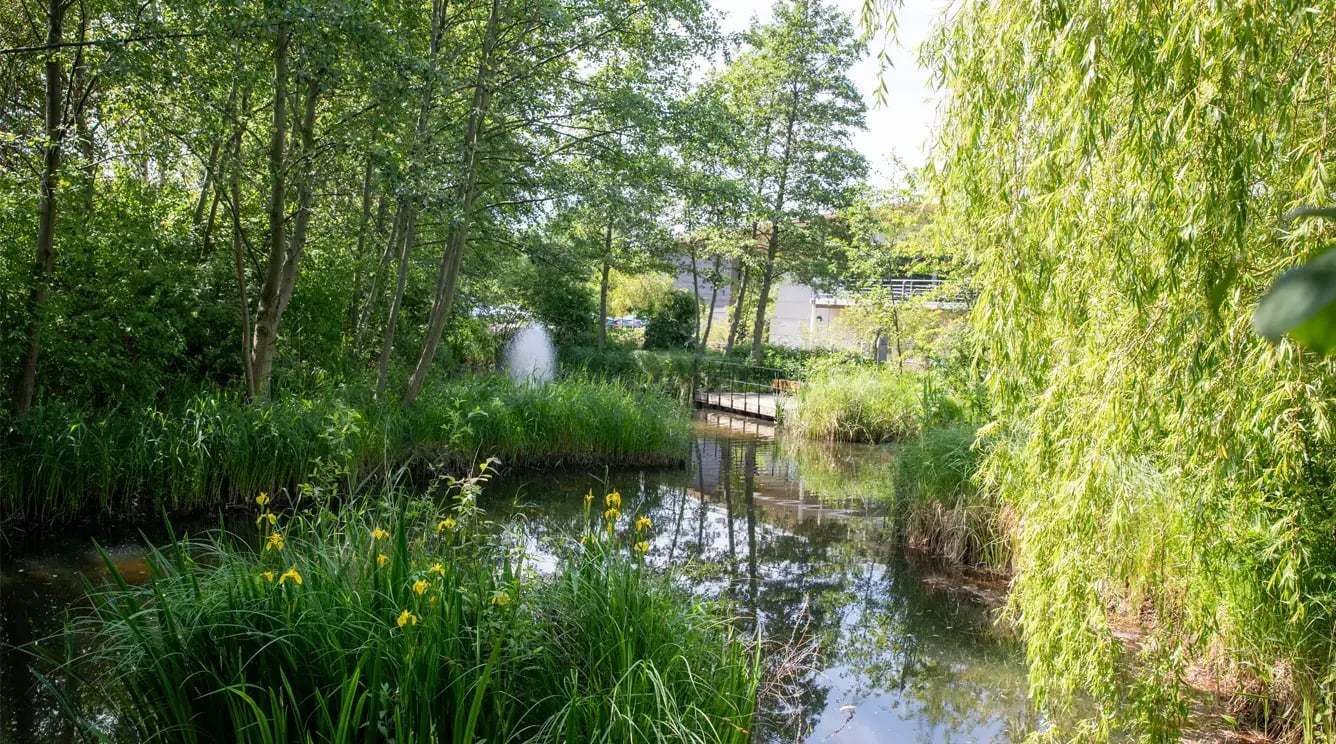
Photo taken on AESSEAL's Tree Walk in Rotherham, UK
We’ve said it before, but it clearly needs saying again - it’s worth paying to save the planet because there’s more to lose than money if we don’t.
In fact, plenty of people have said it over the centuries – it’s not a new problem – and the warnings have been dismissed for longer than most would care to think.
AESSEAL provides engineering solutions for a better world through its sustainability initiatives and this website contains examples of how such an approach can benefit business as well as the planet.
Will we be ignored as these people below were?
First up, fourth century BCE Greek philosopher Theophrastus observed how marsh draining had made an area more likely to freeze, and speculated that lands became warmer when forest clearing exposed them to sunlight. Ignored!
In the 15th century Renaissance European scholars wrote about how deforestation, irrigation, and grazing had altered the lands around the Mediterranean since ancient times and believed that weather had been affected by human intervention. Ignored!
In 1824 French physicist Joseph Fourier was the first to talk about the natural greenhouse effect, suggesting the atmosphere traps heat to keep Earth warm. Ignored!
Seventy years later, Swedish chemist Svante Arrhenius proved that doubling atmospheric CO₂ could raise global temperatures significantly through the greenhouse effect — the earliest real warning about fossil-fuel-driven warming. Ignored!
In 1938 British engineer Guy Callendar’s historical weather records showed global temperatures were rising and directly linked this trend to industrial CO₂ emissions. Listened to, but with a collective shoulder shrug!
Then, in 1965, Charles David Keeling and a scientific advisory panel warned U.S. President Lyndon B. Johnson that fossil fuel emissions were a rising "invisible pollutant" altering the planet's energy balance. Johnson was shocked, but action was not taken!
In 1988 NASA scientist James Hansen testified before the U.S. Senate that the greenhouse effect had arrived, shifting climate change from a theoretical debate into the global political spotlight. Ears were twitching.
His review proposed that one per cent of global GDP per annum be invested to avoid the worst effects of climate change, which he later increased to two per cent.
These effects threatened the basic elements of life for people — water, food production, health, and use of land and the environment — with the poorest countries and people suffering the most, he said.
Tellingly, he added that the transition to a low-carbon economy would bring challenges for competitiveness but also opportunities for growth.
Policies to support the development of a range of low-carbon and high-efficiency technologies were required urgently, he said. He was, of course, decried by most economists and business owners, who were and still are more concerned with the present than the future.
Twenty years on and governments continue to refuse to act, markets over-value fossil fuel companies, investors punish businesses that prepare for a low-carbon world.
If we are to build a prosperous economy, a thriving planet and sustainable communities, we must embrace values that give equal importance to all three.
We need to be Planet Positive in everything we do.