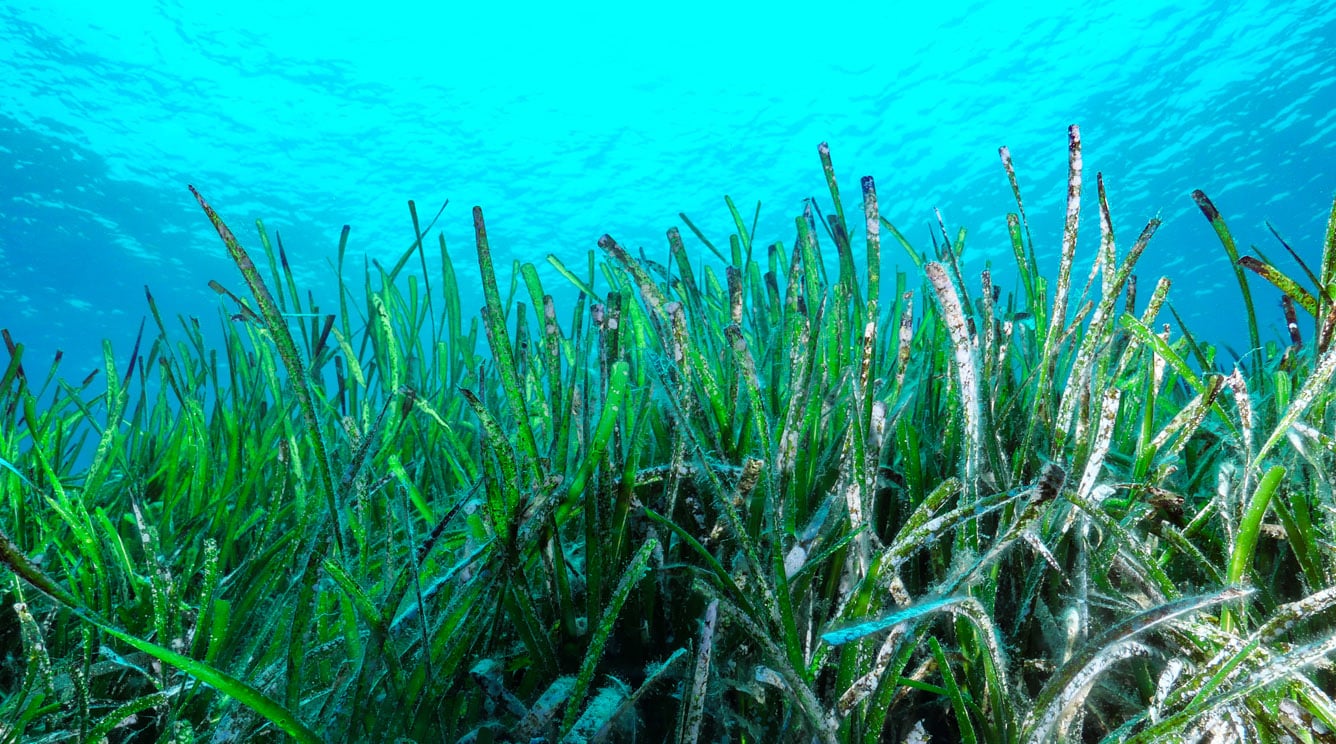
Few people, apart from scuba divers and yacht owners are aware that our oceans host abundant meadows of Posidonia and other seaweed species collectively known as ‘seagrass’.
Despite covering less than one per cent of the ocean floor, seagrass meadows are estimated to account for 10–18% of the ocean’s total carbon storage.
Capturing carbon up to 35 times faster than tropical rainforests, a single hectare of seagrass can offset the annual emissions from 10–22 cars.
Seagrass meadows transform bare sand sediments into rich ecosystems, providing shelter and homes for wildlife, including many economically important finned fish species.
These ’meadows’ are made up of flowering plants found in shallow coastal waters with over 70 species worldwide forming the most widespread coastal ecosystems on the planet.
The carbon stored in these ecosystems is protected as long as the habitat remains healthy, and unlike rainforests, there is no risk of fire or storm damage. Ideally, the carbon can remain buried in the seafloor sediments for thousands of years.
However, seagrass meadows are vulnerable to pollution, coastal development, and physical damage, caused for example, by dragging boat anchors. This not only reduces the planet’s capacity to absorb future emissions but risks releasing the vast amounts of carbon already stored in the sediment back into the atmosphere and ocean.