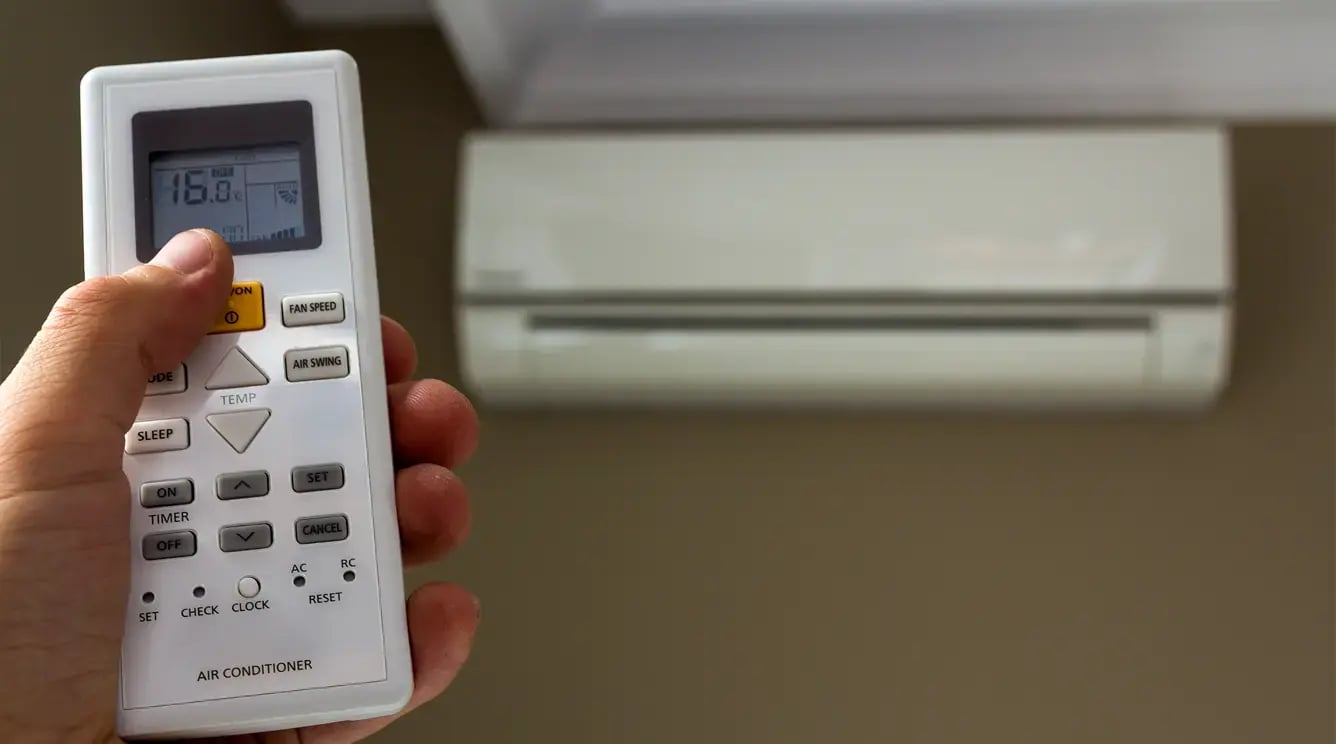
We used to simply open a window, but a report has now called for widespread air conditioning across the UK as temperatures are forecast to exceed 40°C by 2050.
Predicted effects include an increase in heat-related deaths, severe water shortages, storm surges, flood risks to homes, droughts and food production problems.
The Climate Change Committee (CCC) report says air conditioning should be installed in all care homes and hospitals within the next ten years, and in all schools within 25 years.
The CCC also says the government should set a maximum temperature for working indoors and outdoors, and the UK should prepare for 2°C of global heating by 2050.
Heatwaves are expected to exceed 40°C in all parts of the UK, with longer periods of hot weather, potentially leading to an additional 10,000 heat-related deaths a year.
CCC adaptation sub-committee chair Julia King said high temperatures posed the most immediate risk to life, and added: “Extreme heat is certainly the most deadly of the climate impacts on the UK, so we need to see cooling rolled out at scale.
“Sometimes this will mean shading, but sometimes it will mean air conditioning. And either way, we’ve got to get serious about protecting our most vulnerable people in hospitals, in care homes, and in schools.”
Current air conditioning systems are seen as energy-intensive, accounting for about four per cent of global greenhouse gas emissions. More efficient modern systems can use heat pumps, which are already subsidised by the government to replace gas boilers, but these are rarely installed.
Sam Alvis, the head of energy security at the IPPR think tank, said: “We are going to have to get used to being a hot country, which is quite a mindset shift for the UK. Air conditioning is actually a great pair for solar from an energy system point of view because it matches supply and demand, and your aircon is only going to be needed above certain temperatures.”
The climate crisis is costing the UK about £60 billion a year, or about two per cent of GDP, including flood damages and the loss of crops to farmers. “The UK was built for a climate that no longer exists today and will be increasingly distant in years to come,” the report found.
The committee also found that without action the 7 million UK properties at risk of flooding could increase by 40% by 2050, and peak flow in rivers could be 45% higher. Sea levels will increase by 20cm to 45cm, putting coastal areas at risk, and heavy rainfall intensity could rise by 60%. By the end of the century, if temperatures rise by 4°C, the storm surges that currently occur once every 100 years will happen every year.
Droughts will also become much more frequent with river flows likely to be about a third lower in summer than they were 20 years ago, and by 2050 the shortfall in the water supply could reach 5 billion litres every day – the equivalent of about 2,000 Olympic swimming pools.
Food prices will rise under the impact of reduced crop yields for UK farmers, with potential disasters overseas, the report says, adding that the government should take steps to ensure at least 60% of the UK’s food continues to be produced here.
Protecting people and infrastructure would cost about £11 billion a year, the CCC estimated, but the price of failure to act is rising and could reach £260 billion a year in just over two decades.
None of the UK’s existing national adaptation plans was fit for purpose, the CCC added.